Icewine - Dr. Paul Rupert
Posted by Chuck Chase
on May 15, 2014
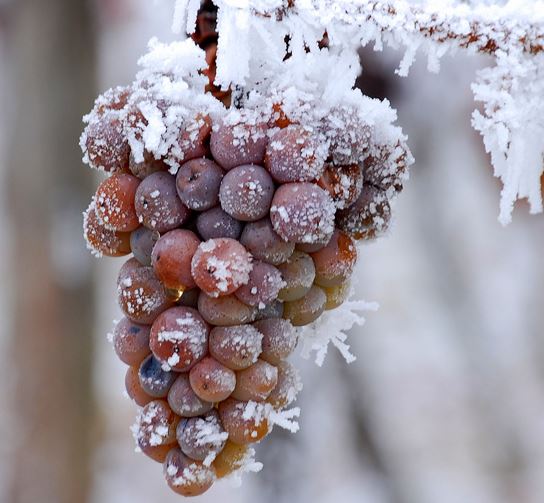 Ray Maxe introduced Dr. Paul Rupert, his neighbor, chemist, winemaker and also Dean of Graduate Studies for Adrian College who shared some interesting facts about what Icewine. A few years ago he enrolled in MSU's Viticultural Program. He explained the process for making clear ice cubes that would later simplify how Icewine is made. Clear cubes freeze from the outside-in while the ones typically made from our home ice makers freeze from the inside-out. The same process occurs in the making of Icewine which is generally quite a bit more expensive and much sweeter than average table wines.
"You can make bad wine from great grapes but you can’t make great wine from bad grapes", Paul said. The two most important molecules are: water and glucose (your brain’s only source of energy!). The process of photosynthesis, he said, was nothing short of amazing – where plants take carbon dioxide, water and sunshine and turn them into glucose or fructose while giving off oxygen. Glucose + water + yeast = ethanol and carbon dioxide (fermentation).
Paul took the audience through the life of a grape berry: Zero to 120 days is the average growing season for grapes. Grapes start out as hard, green spheres and continue to get larger and larger over time and are quite bitter to the taste. Half way through they begin to change in appearance as well as their chemical makeup as their sugar content increases. Paul then explained the term "brix”in the grape. Some 55 days into the growing season, grapes contain approximately 4% sugar content. Grapes are harvested after 4 months when they contain about 24% sugar.
They then go into the winery where they are crushed, yeast is added, then they are clarified and then bottled. That the process. For Icewine, however, the process is slightly different. In fact, it originated through a mistake or by accident when in 1794 in Germany a vineyard was subjected to an unexpected freeze. The owner of the vineyard, instead of letting the grapes hang until they rotted, picked them anyway and they became the ingredients for the first ever Icewine!
Probably the best Icewine makers in the world, Paul said, are in Canada. The VQA is the body governing this industry. They have imposed very stringent requirements for every manufacturer. You can’t just take grapes and freeze them yourself, they have to be naturally produced; they cannot be harvested before November 15 and their temperature cannot be less than 8 degrees C, etc. Typical Icewines will have a alcohol content between 7.5-15% and the sugar content must be 12.5%. For stillwines, the content is about 12%. Dry table wines have only about a 1/10 of a % sugar content.
Paul concluded his presentation by giving everyone a taste of his favorite Icewine while mentioning that their expense is due to the fact that the juice yield of a typical vineyard is only 15-20%.